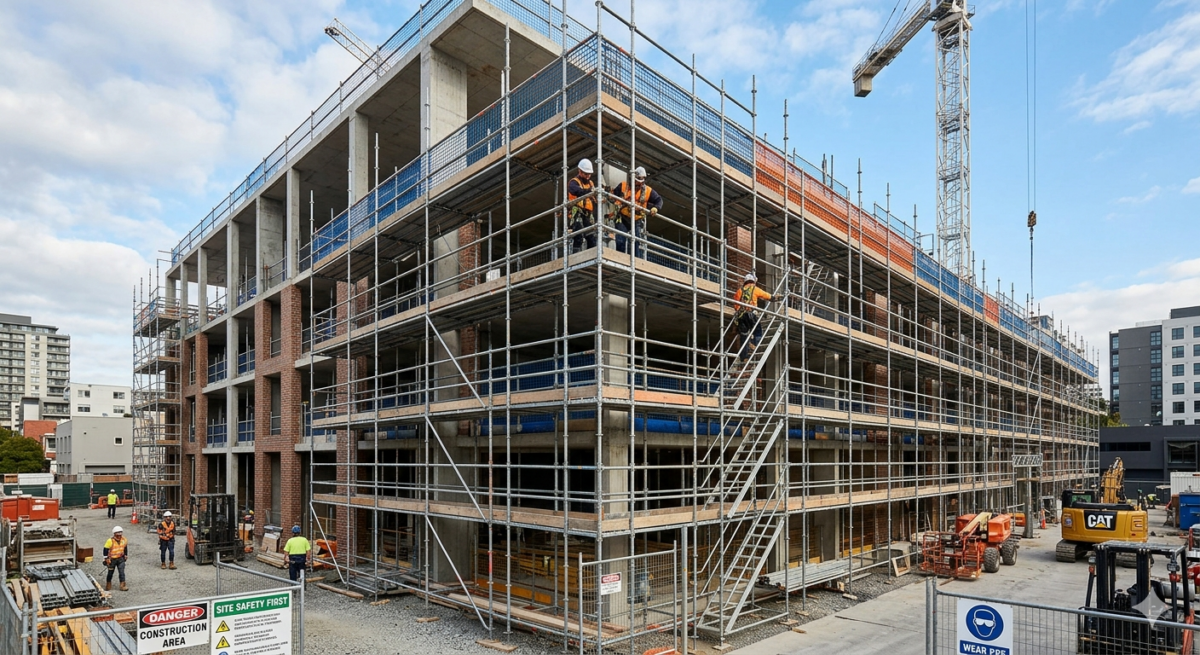
Scaffolding plays a critical role in construction, maintenance, and industrial projects. However, even the strongest scaffold structure can become unsafe without proper bracing. Understanding the types of bracing in scaffolding is essential for ensuring worker safety, preventing structural movement, and maintaining scaffold stability under various loads and environmental conditions.
Bracing acts as the backbone of a scaffold support system. It helps distribute loads, resist lateral forces, and prevent collapse caused by wind, vibration, or improper loading. Whether you are a scaffolding contractor, site engineer, safety officer, or construction student, understanding the different bracing systems can help improve both safety and efficiency on site.
In this guide, we will explore every major type of scaffolding bracing, their functions, advantages, applications, and safety considerations.
Table of Contents
- Why Bracing is Important in Scaffolding
- Comparison Table of Bracing Types
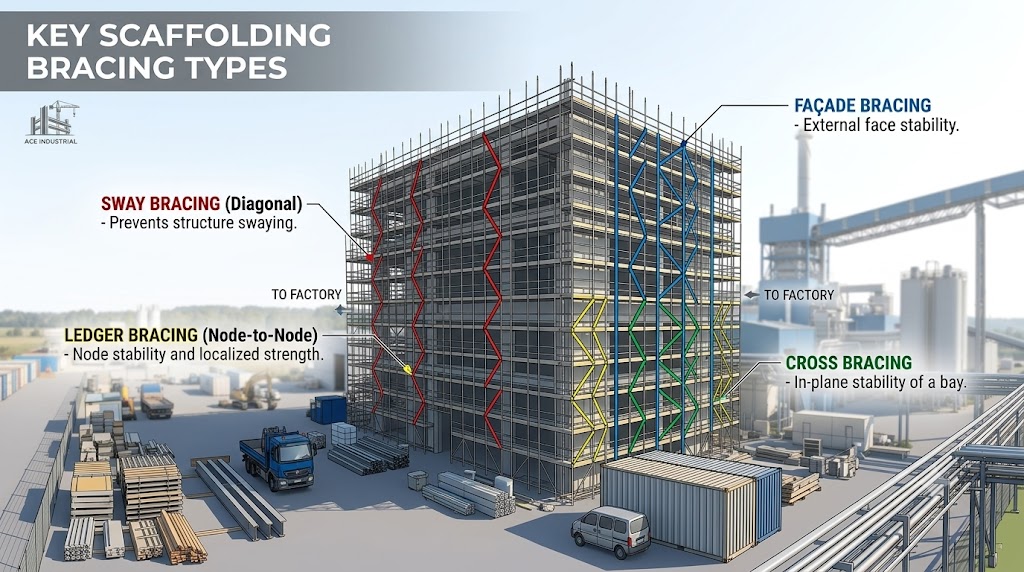
- Cross Bracing (X Bracing)
- Ledger Bracing
- Facade Bracing
- Transverse Bracing
- Knee Bracing
- Plan Bracing
- Horizontal Bracing
- Putlog Bracing
- Common Bracing Mistakes to Avoid
- Scaffolding Bracing Requirements and Safety Standards
- Frequently Asked Questions
- Conclusion
Why Bracing is Important in Scaffolding
Bracing is one of the most important structural elements in any scaffold system. It helps maintain the shape and rigidity of the scaffold while resisting external and internal forces.
Key Functions of Scaffolding Bracing
Prevents lateral movement and sway
Improves scaffold stability
Distributes loads evenly
Reduces the risk of structural collapse
Enhances worker safety
Increases resistance to wind loads
Maintains alignment of scaffold components
Without adequate bracing, a scaffold may become unstable even if all standards, ledgers, and transoms are installed correctly.
Practical Site Example
Imagine a 30-meter-high facade scaffold installed around a commercial building. Strong winds can create significant lateral forces on the scaffold. Properly installed cross bracing and facade bracing help transfer these forces safely to the ground, reducing the risk of movement or collapse.
Comparison Table of Types of Bracing in Scaffolding
| Bracing Type | Main Purpose | Direction | Common Applications |
| Cross Bracing | Prevent sway | Diagonal | Frame scaffolds, facade scaffolds |
| Ledger Bracing | Longitudinal stability | Lengthwise | Long scaffold runs |
| Facade Bracing | Front-face rigidity | Vertical face | Building exterior scaffolds |
| Transverse Bracing | Width stability | Across width | Wide scaffold structures |
| Knee Bracing | Joint reinforcement | Angular | Heavy-duty and cantilever scaffolds |
| Plan Bracing | Prevent twisting | Horizontal | Tower scaffolds |
| Horizontal Bracing | Improve rigidity | Horizontal | Mobile and modular scaffolds |
| Putlog Bracing | Support putlog scaffold | Various | Brickwork scaffolds |
Cross Bracing (X Bracing) in Scaffolding
What is Cross Bracing?
Cross bracing, also known as X bracing, consists of two diagonal members crossing each other between scaffold standards. Together they form an “X” shape that provides lateral support and structural rigidity.
Cross bracing is among the most commonly used forms of scaffolding bracing in construction projects worldwide.
Purpose of Cross Bracing
The primary purpose of cross bracing is to prevent sideways movement and sway in the scaffold structure.
It helps:
Stabilize the scaffold frame
Resist wind loads
Maintain alignment
Transfer lateral forces safely
Advantages of Cross Bracing
Excellent structural stability
Easy installation
Cost-effective solution
Improves worker safety
Suitable for tall scaffolds
Applications of Cross Bracing
Cross bracing is commonly used in:
Frame scaffolding
Building facade scaffolds
Industrial maintenance scaffolds
Bridge construction projects
Temporary access structures
Safety Considerations
When installing cross bracing:
Ensure secure connections at all ends
Inspect braces for deformation or corrosion
Avoid removing braces during scaffold use
Follow manufacturer guidelines
Practical Example
A residential tower project uses frame scaffolding around its exterior walls. Cross braces are installed in alternating bays to maintain stability and prevent sway during high winds.
Ledger Bracing
What is Ledger Bracing?
Ledger bracing is a diagonal bracing system installed along the length of the scaffold. It connects multiple standards and ledgers to create a stronger scaffold structure.
Unlike cross bracing, ledger bracing focuses on longitudinal stability.
Purpose of Ledger Bracing
Ledger bracing helps:
Prevent movement along the scaffold length
Improve overall rigidity
Support load transfer
Advantages of Ledger Bracing
Enhances structural integrity
Reduces longitudinal displacement
Suitable for long scaffolding runs
Improves load distribution
Applications of Ledger Bracing
Ledger bracing is widely used in:
Industrial plants
High-rise construction
Long building facades
Shipyard scaffolding
Safety Considerations
Maintain proper brace angles
Inspect connections regularly
Replace damaged tubes immediately
Ensure compliance with design drawings
Practical Example
A scaffolding contractor installs a 100-meter-long scaffold around a factory building. Ledger bracing is added at regular intervals to prevent movement along the scaffold’s length.
Facade Bracing
What is Facade Bracing?
Facade bracing refers to diagonal bracing installed on the external face of the scaffold. It strengthens the scaffold against forces acting on the building side.
This type of bracing is especially important in tall facade scaffolds exposed to wind loads.
Purpose of Facade Bracing
Facade bracing is designed to:
Improve front-face stability
Reduce sway
Resist wind pressure
Maintain scaffold geometry
Advantages of Facade Bracing
Increased resistance to environmental forces
Better worker safety
Improved scaffold rigidity
Enhanced load transfer
Applications of Facade Bracing
Common applications include:
Commercial buildings
Residential towers
Industrial facilities
Renovation projects
Safety Considerations
Verify brace spacing requirements
Inspect couplers regularly
Ensure compatibility with scaffold design
Do not remove braces without authorization
Practical Example
During the construction of a high-rise office building, facade bracing is installed across multiple levels to improve stability during monsoon conditions and strong winds.
Transverse Bracing
What is Transverse Bracing?
Transverse bracing is installed across the width of a scaffold. It provides lateral support between standards and helps maintain dimensional stability.
This bracing is particularly useful in wide scaffold structures.
Purpose of Transverse Bracing
Its main functions include:
Preventing sideways distortion
Supporting width stability
Improving structural strength
Enhancing load resistance
Advantages of Transverse Bracing
Increased scaffold stiffness
Better resistance to lateral forces
Improved safety performance
Suitable for large structures
Applications of Transverse Bracing
Transverse bracing is commonly used in:
Wide access scaffolds
Industrial construction
Heavy-duty scaffolding
Infrastructure projects
Safety Considerations
Follow engineered scaffold drawings
Inspect all bracing members before use
Ensure secure coupler installation
Conduct regular scaffold inspections
Practical Example
A refinery maintenance project requires a wide scaffold platform around processing equipment. Transverse bracing is installed to maintain width stability and ensure safe worker
Knee Bracing in Scaffolding
What is Knee Bracing?
Knee bracing is a short diagonal brace installed between a vertical standard and a horizontal ledger or transom. It forms a triangular support that strengthens scaffold joints and improves load transfer.
Knee bracing is particularly useful in heavy-duty scaffolding and cantilever scaffolding systems where additional support is required.
Purpose of Knee Bracing
The primary purpose of knee bracing is to:
Strengthen scaffold joints
Reduce movement at connection points
Improve load distribution
Increase overall scaffold rigidity
Support cantilever sections
Advantages of Knee Bracing
Provides additional structural support
Reduces stress on scaffold joints
Enhances safety in heavy-load applications
Easy to install and inspect
Improves scaffold lifespan
Applications of Knee Bracing
Knee bracing is commonly used in:
Cantilever scaffolding
Heavy-duty industrial scaffolds
Loading platforms
Complex scaffold configurations
Temporary support structures
Safety Considerations
Ensure proper connection using approved couplers
Inspect for bent or damaged braces
Follow scaffold design specifications
Avoid overloading braced sections
Practical Example
During bridge maintenance work, knee braces are installed at loading bays where workers store tools and materials. The braces help reduce stress concentrations and improve structural stability.
Plan Bracing
What is Plan Bracing?
Plan bracing is a horizontal bracing system installed in the plan view of the scaffold. It is typically positioned at the top or base level to prevent twisting and racking of the scaffold structure.
Plan bracing is essential in tall scaffold towers and free-standing scaffolds.
Purpose of Plan Bracing
Plan bracing helps:
Prevent scaffold twisting
Improve horizontal stability
Maintain structural alignment
Increase resistance to wind load
Advantages of Plan Bracing
Reduces torsional movement
Improves tower stability
Enhances structural integrity
Supports safe working conditions
Applications of Plan Bracing
Plan bracing is often used in:
Scaffold towers
Mobile scaffolds
Birdcage scaffolds
Independent scaffolding systems
Safety Considerations
Install according to design requirements
Check couplers and connections regularly
Inspect after severe weather conditions
Ensure adequate brace spacing
Practical Example
A free-standing scaffold tower used for exterior painting includes plan bracing at multiple levels to prevent twisting caused by wind pressure.
Horizontal Bracing
What is Horizontal Bracing?
Horizontal bracing consists of braces installed parallel to the ground. These braces connect scaffold members and improve the rigidity of the entire structure.
Horizontal bracing often works together with vertical and diagonal bracing systems.
Purpose of Horizontal Bracing
Horizontal bracing is designed to:
Increase scaffold stiffness
Reduce horizontal displacement
Improve load distribution
Support overall scaffold stability
Advantages of Horizontal Bracing
Better structural performance
Improved resistance to movement
Enhanced worker safety
Increased scaffold durability
Applications of Horizontal Bracing
Horizontal bracing is commonly used in:
Mobile scaffolds
Modular scaffold systems
Industrial maintenance scaffolds
Large temporary access structures
Safety Considerations
Verify brace placement during erection
Inspect braces before each use
Ensure compatibility with scaffold design
Replace damaged components immediately
Practical Example
A maintenance scaffold inside a manufacturing plant uses horizontal bracing to prevent movement caused by equipment vibrations and worker activity.
Putlog Bracing
What is Putlog Bracing?
Putlog bracing is used in putlog scaffolding systems where one end of the scaffold is supported by the building structure. The bracing provides additional stability and prevents displacement.
Although less common in modern systems, putlog bracing remains important in masonry and brickwork projects.
Purpose of Putlog Bracing
Putlog bracing helps:
Stabilize putlog scaffolds
Support masonry operations
Improve load transfer
Reduce scaffold movement
Advantages of Putlog Bracing
Increased structural support
Better safety during brickwork
Improved scaffold stability
Cost-effective reinforcement
Applications of Putlog Bracing
Putlog bracing is used in:
Brick masonry work
Stone construction
Traditional building projects
Low-rise construction
Safety Considerations
Verify wall support conditions
Inspect putlogs regularly
Ensure proper installation
Avoid excessive loading
Practical Example
A masonry contractor uses putlog scaffolding during brick wall construction. Additional bracing helps maintain stability while workers install blocks and mortar.
Common Bracing Mistakes to Avoid
Even experienced contractors sometimes make mistakes that reduce scaffold stability and increase safety risks.
1. Missing Braces
Failure to install required braces can significantly weaken the scaffold structure.
2. Incorrect Brace Angles
Improper brace positioning reduces the effectiveness of load transfer and stability.
3. Using Damaged Components
Bent, corroded, or cracked braces should never be used.
4. Unauthorized Removal of Bracing
Workers sometimes remove braces for easier access. This practice can create dangerous instability.
5. Poor Coupler Installation
Loose or incorrectly installed couplers can lead to brace failure.
6. Ignoring Wind Loads
Tall scaffolds require proper bracing to withstand environmental forces.
7. Lack of Inspection
Regular scaffold inspections are essential for identifying damaged or missing braces.
Scaffolding Bracing Requirements and Safety Standards
Proper bracing must comply with recognized scaffolding standards and safety regulations.
OSHA Requirements
According to OSHA guidelines:
Scaffolds must be adequately braced to prevent swaying and displacement.
Bracing should be installed according to manufacturer recommendations.
Components must be inspected before use.
Damaged braces should be replaced immediately.
Scaffolds must be capable of supporting intended loads safely
IS 3696 Recommendations
IS 3696 provides guidance for scaffolds used in construction activities.
Key recommendations include:
Adequate diagonal bracing
Proper scaffold design
Regular inspections
Safe working platforms
Load control measures
Competent supervision
General Scaffolding Safety Recommendations
To improve scaffold safety:
Conduct daily inspections
Train workers properly
Use approved scaffold components
Install guardrails and toe boards
Monitor weather conditions
Follow engineered scaffold drawings
Maintain proper load limits
Frequently Asked Questions (FAQs)
1. What is the main purpose of bracing in scaffolding?
Bracing improves scaffold stability by resisting lateral movement, wind loads, and structural deformation.
2. Which bracing type is most commonly used?
Cross bracing (X bracing) is the most widely used scaffolding bracing system.
3. What is the difference between cross bracing and ledger bracing?
Cross bracing provides lateral stability, while ledger bracing improves longitudinal stability along the scaffold length.
4. Why is facade bracing important?
Facade bracing strengthens the front face of the scaffold and helps resist wind pressure.
5. Where is knee bracing used?
Knee bracing is commonly used in cantilever scaffolds, loading platforms, and heavy-duty structures.
6. What does plan bracing prevent?
Plan bracing prevents twisting and torsional movement of scaffold towers.
7. Is horizontal bracing necessary?
Yes. Horizontal bracing improves overall scaffold rigidity and load distribution.
8. How often should scaffold bracing be inspected?
Bracing should be inspected before use, after modifications, and following adverse weather conditions.
9. Can damaged braces be repaired?
Damaged braces should generally be replaced rather than repaired unless approved by the manufacturer.
10. What happens if scaffolding lacks proper bracing?
Insufficient bracing can lead to instability, excessive movement, structural failure, and serious safety hazards.
Conclusion
Understanding the various types of bracing in scaffolding is essential for maintaining scaffold stability, improving worker safety, and ensuring compliance with industry standards. Each bracing system serves a unique purpose, from preventing lateral movement through cross bracing to reducing twisting with plan bracing.
Whether you are working on a residential building, industrial facility, bridge project, or maintenance operation, selecting and installing the correct scaffolding bracing system is critical to project success.
By following OSHA guidelines, IS 3696 recommendations, and good construction practices, contractors can create safer, stronger, and more reliable scaffold structures.
Proper bracing is not just a structural requirement—it is a vital component of every safe and efficient scaffolding system.
access.
For more blogs related to scaffolding, visit here.
To hire us for your scaffolding project, contact us.